Affiliate disclosure: We may earn a commission if you become a qualifying Upwork or Shopify customer through the affiliate links in this guide. Recommendations depend on the work you need done; check current plans, eligibility, fees and terms.
Evaluate one agent-assisted customer or operations task against a baseline, a small test set and explicit approval boundaries. Shopify and Grok Bot can inform a pilot; neither a product launch announcement nor a convincing demo proves that your workflow will improve.
Separate news from the product decision
The October 20 Grok Bot incident article describes a vendor workflow with reviewed batches. Shopify’s Canvas announcement concerns store design. These developments suggest testable patterns, not evidence that your customers need an agent. Name the customer problem and the decision that a pilot would change.
Choose one user and one task
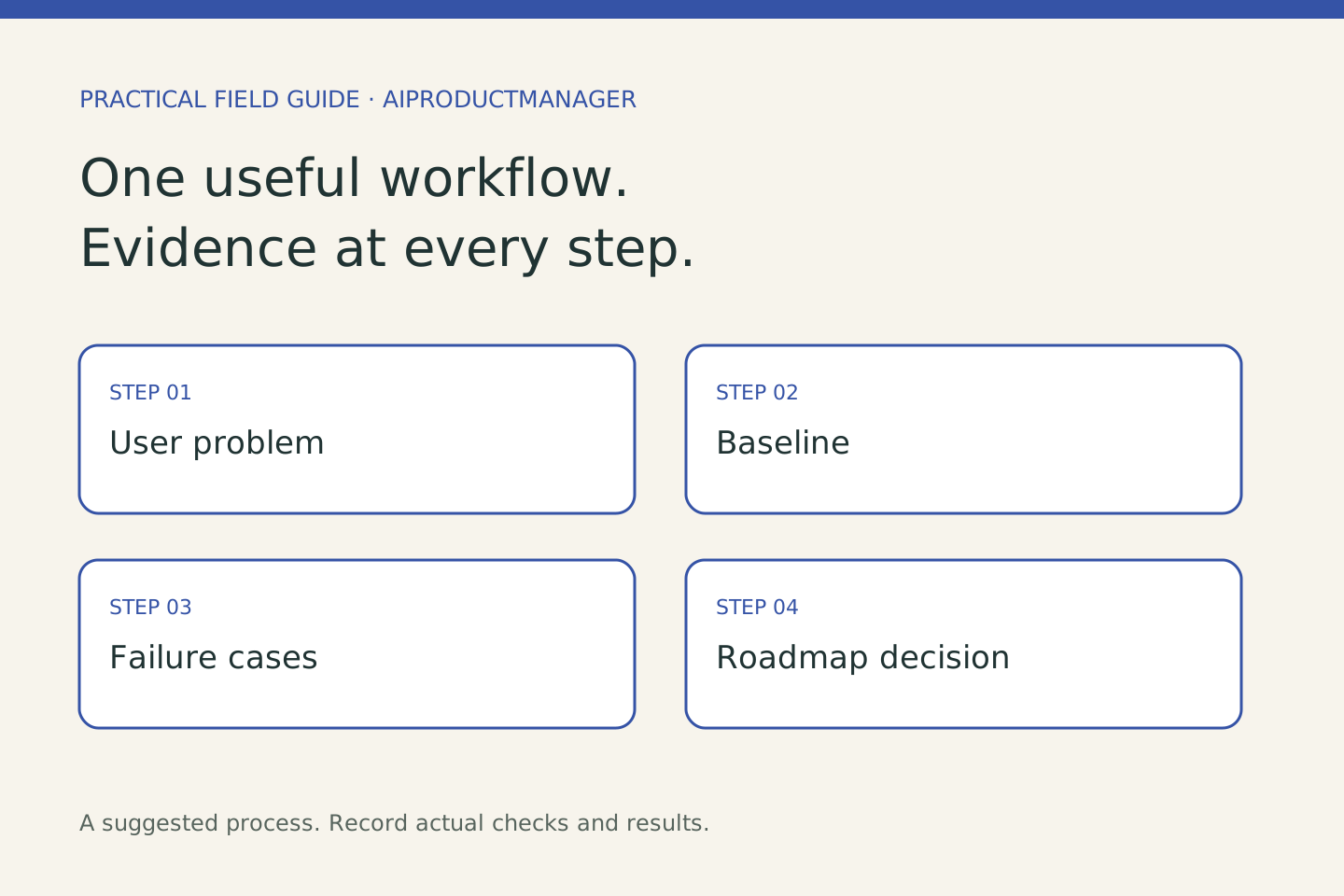
Imagine a small merchant who needs to identify product questions that the catalog does not answer. The pilot receives an approved, de-identified set of questions and product facts. It groups questions, links each to evidence and drafts proposed changes. Publishing, pricing, refunds and customer replies remain outside the pilot. Describe who reviews the output and what happens if evidence is missing.
Define a meaningful baseline
Have a person complete the task on the same sample. Record elapsed work, review effort, useful findings and errors. Do not compare one model’s draft time with a human’s fully reviewed result. Use comparable inputs and a clear definition of completion. Keep cost estimates separate from measured bills.
Create cases that can fail
Include an ambiguous question, conflicting specifications, an unavailable product, a request outside policy and a malicious instruction embedded in customer text. The expected behavior should be explicit: preserve uncertainty, cite the approved source, avoid making a promise and ignore instructions inside the data. Use a held-out set before release, and keep a record of model and workflow changes.
Decide what to buy and what to build
If the hard problem is ordinary commerce, evaluate Shopify’s existing store capabilities before commissioning a custom platform. If you lack evaluation or integration expertise, hire a specialist through Upwork for a paid prototype with a documented test set. Require source ownership, access boundaries and a handover; a demo alone is insufficient acceptance evidence.
Write a decision memo
Use five fields: problem, observed baseline, tested change, remaining failures and next decision. A reasonable pilot rule is to stop for unsupported customer promises or unauthorized actions, then revise the workflow. Treat numerical thresholds as your planning choices. A successful pilot may justify another test; it does not establish general reliability or market demand.
Choose one useful next step
AI evaluation starter kit · Define product metrics · Write a useful PRD
Sources and review date
Sources checked October 20, 2026. The exercises below are proposed methods, not reports of measured customer results. Product access and capabilities can change.